
In Arni AG, on the border with the canton of Zurich. For pain that keeps coming back, and for pain that X-rays or MRI scans do not explain.
What fascia is
Fascia is connective tissue. It wraps every muscle, every bundle of muscle fibres and every single fibre, and links muscles, tendons, ligaments and joints into one continuous web. When you lift your arm, no single muscle works alone. The force runs through this web into your trunk.
Fascia is packed with nerve endings. It tells the nervous system about tension, position and movement, and it can cause pain itself. For a long time it was seen as little more than packing tissue. Today researchers study it as a tissue with its own role in movement and pain.
Why it often hurts somewhere else
When layers of tissue stop gliding freely in one area, the body shifts the load elsewhere. A stiff hip, for example, changes how the knee is loaded with every step. Many people only notice it after a few kilometres of walking or running, and they notice it in the knee.
That is why treatment directly on the knee sometimes helps only for a short while. I look at how you move as a whole and treat where the tension starts.
When it can help
- Back and neck pain that keeps returning, or where scans show no clear cause
- Knee pain when running, on stairs or after surgery
- Tennis elbow that does not settle with rest
- Shoulder pain when lifting or at night
- Achilles and heel pain
- Muscle tension and tension-type headaches
- Pain after surgery and scar pain
- Sports injuries and training overload
I can also start soon after an accident or operation. I then work away from the injured area, in line with your doctor’s or surgeon’s instructions, to take load off it.
See a doctor first if
- the pain started after a fall or an accident and has not yet been checked by a doctor
- you have numbness, tingling or weakness in an arm or leg
- you notice numbness between your legs or around your bottom, or changes in bladder or bowel control: go to an emergency department straight away
- the pain comes with fever or unexplained weight loss
- the pain is constant at night and does not change with position
- a headache is sudden and severe, or comes with vision, speech or balance problems: call 144 straight away
What a session looks like
- Talk. How long it has been going on, where exactly it hurts, what helps and what makes it worse. Old injuries count too.
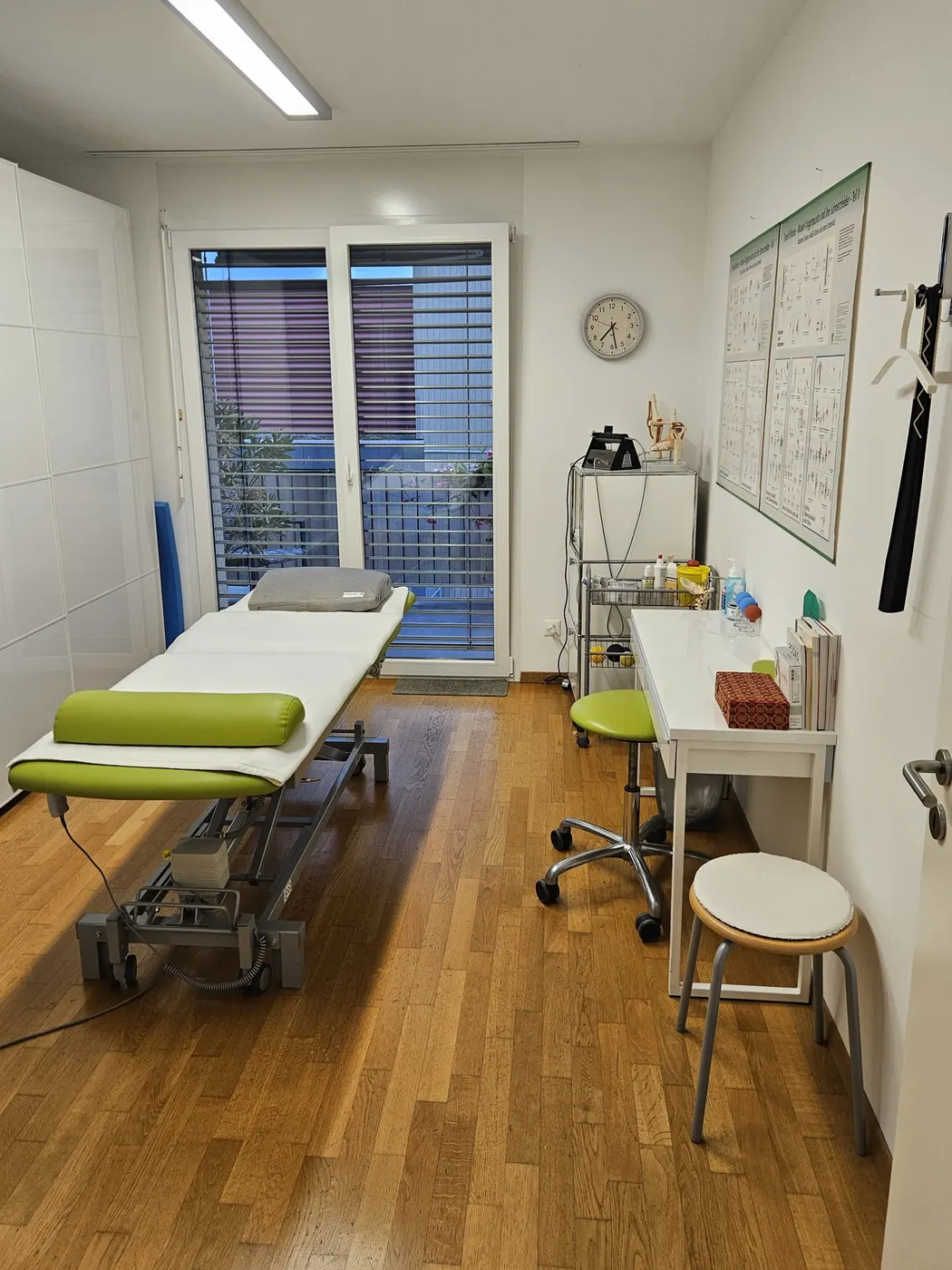
- Examination. I watch you move and feel the tissue, often far from the painful spot.
- Treatment. Pressure and friction on a few carefully chosen points.
- Check. We repeat the movement from the examination so you can feel for yourself whether something has changed.
A session lasts 50 minutes. How many you need depends on the problem. After the first examination I will tell you what to expect.
Does it hurt?
You will clearly feel the pressure on the treated points, and at times it is uncomfortable. I only press as firmly as you allow. The area may be tender for a day or two, much like after a hard workout.
Cost
A 50-minute session costs CHF 150. Depending on your supplementary insurance, part of the cost may be refunded. Please check with your insurer before your first session.
Book an appointment
Online booking is in German, but the session itself can be in English.